Saturday, June 17, 2023

x̄ - > The Mathematical Description of Fluid Flow

Fluid Flow Description tree

The Mathematical Description of Fluid Flow

The mathematical description of fluid flow is based on the principles of fluid dynamics, which study the motion of fluids under various conditions. The fundamental equations that govern fluid flow are the Navier-Stokes equations, which are a set of partial differential equations that describe the conservation of mass, momentum, and energy in a fluid.

The general form of the Navier-Stokes equations for an incompressible fluid is:

    ∇ · v = 0

    ∂v/∂t + (v · ∇)v = -1/ρ ∇P + Ξ½∇²v
  

where:

  • ∇ is the nabla operator, which represents the spatial derivatives (∂/∂x, ∂/∂y, ∂/∂z) in Cartesian coordinates.
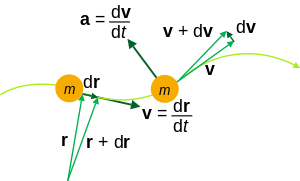
  • v = (u, v, w) represents the velocity vector of the fluid in three dimensions, where u, v, and w are the respective components in the x, y, and z directions.
  • ∂/∂t is the partial derivative with respect to time.
  • P is the pressure of the fluid.
  • ρ is the density of the fluid.
  • Ξ½ is the kinematic viscosity of the fluid.

The first equation is the continuity equation, which states that the divergence of the velocity field is zero, implying that mass is conserved within the fluid.

The second equation is the momentum equation, which describes how the velocity of the fluid changes with time and space. The left-hand side represents the time rate of change of velocity, while the terms on the right-hand side represent the various forces acting on the fluid: pressure gradient (∇P) and viscous forces (Ξ½∇²v).

In addition to the Navier-Stokes equations, the energy equation can be included to study the temperature and thermal aspects of fluid flow. However, this equation is dependent on the specific properties of the fluid and may include terms related to heat conduction, convection, and radiation.

Solving the Navier-Stokes equations is a challenging task and often requires numerical methods due to their complex nature. Various mathematical techniques such as finite difference, finite element, or finite volume methods are employed to approximate the solutions for practical applications.

It's worth noting that the Navier-Stokes equations are valid for a wide range of fluid flow regimes but become more challenging as the flow becomes turbulent. In such cases, additional turbulence models or computational fluid dynamics (CFD) techniques are used to accurately predict the flow behavior.

Fulfilled by Jumia The mathematical description of fluid flow is based on the principles of fluid dynamics, which study the motion of fluids under various conditions. The fundamental equations that govern fluid flow are the Navier-Stokes equations, which are a set of partial differential equations that describe the conservation of mass, momentum, and energy in a fluid.


 The general form of the Navier-Stokes equations for an incompressible fluid is: ∇ · v = 0 ∂v/∂t + (v · ∇)v = -1/ρ ∇P + Ξ½∇²v where: - ∇ is the nabla operator, which represents the spatial derivatives (∂/∂x, ∂/∂y, ∂/∂z) in Cartesian coordinates. - v = (u, v, w) represents the velocity vector of the fluid in three dimensions, where u, v, and w are the respective components in the x, y, and z directions. - ∂/∂t is the partial derivative with respect to time. - P is the pressure of the fluid. - ρ is the density of the fluid. - Ξ½ is the kinematic viscosity of the fluid. 

 
The first equation is the continuity equation, which states that the divergence of the velocity field is zero, implying that mass is conserved within the fluid. The second equation is the momentum equation, which describes how the velocity of the fluid changes with time and space. The left-hand side represents the time rate of change of velocity, while the terms on the right-hand side represent the various forces acting on the fluid: pressure gradient (∇P) and viscous forces (Ξ½∇²v). 


 In addition to the Navier-Stokes equations, the energy equation can be included to study the temperature and thermal aspects of fluid flow. However, this equation is dependent on the specific properties of the fluid and may include terms related to heat conduction, convection, and radiation. Solving the Navier-Stokes equations is a challenging task and often requires numerical methods due to their complex nature. 


Various mathematical techniques such as finite difference, finite element, or finite volume methods are employed to approximate the solutions for practical applications. It's worth noting that the Navier-Stokes equations are valid for a wide range of fluid flow regimes but become more challenging as the flow becomes turbulent. In such cases, additional turbulence models or computational fluid dynamics (CFD) techniques are used to accurately predict the flow behavior.

No comments:

Meet the Authors
Zacharia Maganga’s blog features multiple contributors with clear activity status.
Active ✔
πŸ§‘‍πŸ’»
Zacharia Maganga
Lead Author
Active ✔
πŸ‘©‍πŸ’»
Linda Bahati
Co‑Author
Active ✔
πŸ‘¨‍πŸ’»
Jefferson Mwangolo
Co‑Author
Inactive ✖
πŸ‘©‍πŸŽ“
Florence Wavinya
Guest Author
Inactive ✖
πŸ‘©‍πŸŽ“
Esther Njeri
Guest Author
Inactive ✖
πŸ‘©‍πŸŽ“
Clemence Mwangolo
Guest Author

x̄ - > Bloomberg BS Model - King James Rodriguez Brazil 2014

Bloomberg BS Model - King James Rodriguez Brazil 2014 πŸ”Š Read ⏸ Pause ▶ Resume ⏹ Stop ⚽ The Silent Kin...

Labels

Data (3) Infographics (3) Mathematics (3) Sociology (3) Algebraic structure (2) Environment (2) Machine Learning (2) Sociology of Religion and Sexuality (2) kuku (2) #Mbele na Biz (1) #StopTheSpread (1) #stillamother #wantedchoosenplanned #bereavedmothersday #mothersday (1) #university#ai#mathematics#innovation#education#education #research#elearning #edtech (1) ( Migai Winter 2011) (1) 8-4-4 (1) AI Bubble (1) Accrual Accounting (1) Agriculture (1) Algebra (1) Algorithms (1) Amusement of mathematics (1) Analysis GDP VS employment growth (1) Analysis report (1) Animal Health (1) Applied AI Lab (1) Arithmetic operations (1) Black-Scholes (1) Bleu Ranger FC (1) Blockchain (1) CATS (1) CBC (1) Capital markets (1) Cash Accounting (1) Cauchy integral theorem (1) Coding theory. (1) Computer Science (1) Computer vision (1) Creative Commons (1) Cryptocurrency (1) Cryptography (1) Currencies (1) DISC (1) Data Analysis (1) Data Science (1) Decision-Making (1) Differential Equations (1) Economic Indicators (1) Economics (1) Education (1) Experimental design and sampling (1) Financial Data (1) Financial markets (1) Finite fields (1) Fractals (1) Free MCBoot (1) Funds (1) Future stock price (1) Galois fields (1) Game (1) Grants (1) Health (1) Hedging my bet (1) Holormophic (1) IS–LM (1) Indices (1) Infinite (1) Investment (1) KCSE (1) KJSE (1) Kapital Inteligence (1) Kenya education (1) Latex (1) Law (1) Limit (1) Logic (1) MBTI (1) Market Analysis. (1) Market pulse (1) Mathematical insights (1) Moby dick; ot The Whale (1) Montecarlo simulation (1) Motorcycle Taxi Rides (1) Mural (1) Nature Shape (1) Observed paterns (1) Olympiad (1) Open PS2 Loader (1) Outta Pharaoh hand (1) Physics (1) Predictions (1) Programing (1) Proof (1) Python Code (1) Quiz (1) Quotation (1) R programming (1) RAG (1) RL (1) Remove Duplicate Rows (1) Remove Rows with Missing Values (1) Replace Missing Values with Another Value (1) Risk Management (1) Safety (1) Science (1) Scientific method (1) Semantics (1) Statistical Modelling (1) Stochastic (1) Stock Markets (1) Stock price dynamics (1) Stock-Price (1) Stocks (1) Survey (1) Sustainable Agriculture (1) Symbols (1) Syntax (1) Taroch Coalition (1) The Nature of Mathematics (1) The safe way of science (1) Travel (1) Troubleshoting (1) Tsavo National park (1) Volatility (1) World time (1) Youtube Videos (1) analysis (1) and Belbin Insights (1) competency-based curriculum (1) conformal maps. (1) decisions (1) over-the-counter (OTC) markets (1) pedagogy (1) pi (1) power series (1) residues (1) stock exchange (1) uplifted (1)

Followers